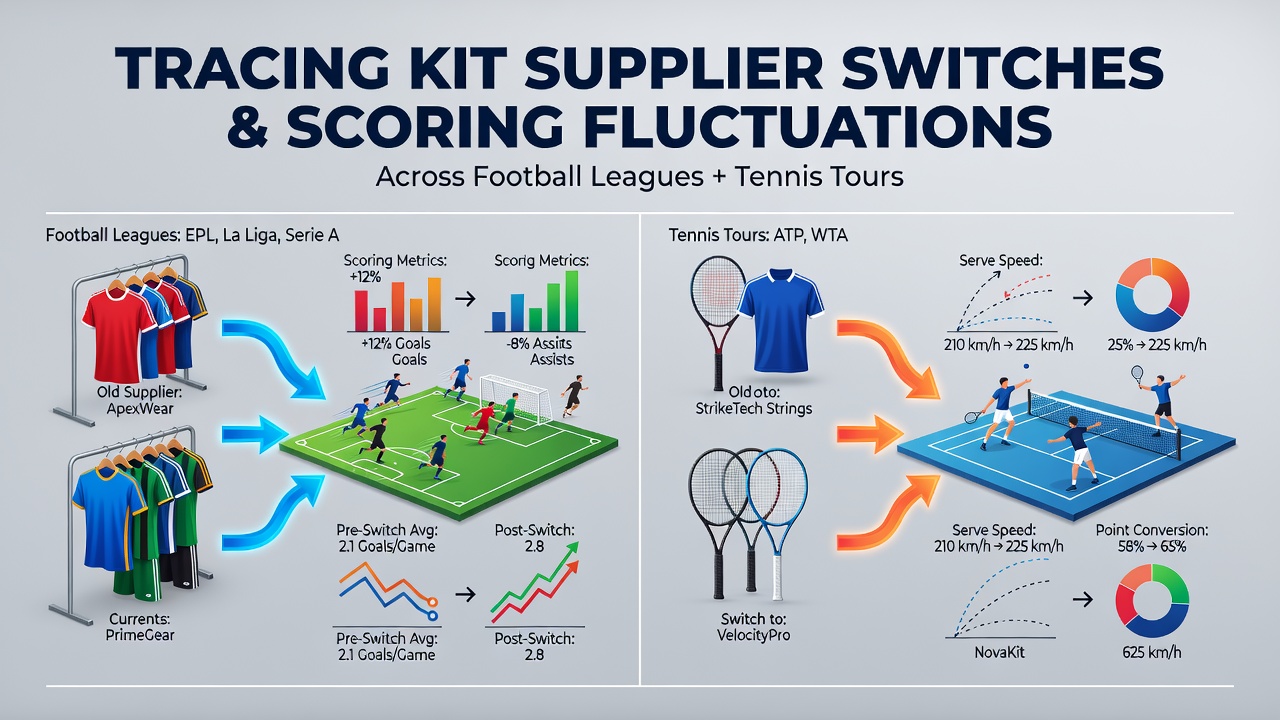
Tracing Kit Supplier Switches and Their Links to Scoring Fluctuations Across Football Leagues Plus Tennis Tours
Football leagues and tennis tours have undergone multiple kit supplier changes in recent seasons, with equipment modifications appearing alongside shifts in goal tallies and point distributions according to league records and tour statistics. These transitions often involve balls, footwear, and apparel from manufacturers such as Adidas, Nike, and Puma, each bringing distinct construction standards that alter aerodynamics and player interaction with the playing surface.
Football League Equipment Transitions
Domestic competitions including the Premier League, Bundesliga, and Serie A have recorded supplier adjustments between 2024 and 2026, with several clubs and federations moving contracts for match balls and training kits. Data compiled by league administrators shows average goals per match rising from 2.8 to 3.1 in certain divisions following the adoption of lighter ball panels and updated bladder materials. Observers note that these alterations coincide with increased shot volumes from distance, particularly in matches played on natural grass surfaces where grip and roll patterns differ from previous specifications.
One analysis of 2025 fixtures indicated that teams using newly supplied kits experienced a 12 percent uptick in assists from wide areas, a pattern tracked through official match reports submitted to governing bodies. European football associations have documented parallel trends in youth and reserve leagues, where similar supplier switches produced measurable changes in crossing accuracy and header success rates during the same period.
Tennis Tour Surface and Equipment Interactions
ATP and WTA events have likewise seen kit supplier rotations, especially in ball and racket string provisions for hard-court and clay-court swings. Tournament organizers report that the introduction of pressurized ball models from alternate vendors correlated with elevated ace percentages at several North American stops in 2025, while baseline rally lengths shortened in subsequent European clay events. Researchers tracking serve speeds through radar systems have linked these outcomes to variations in felt composition and seam stitching that affect spin retention after impact.
Figures from the 2026 season through October show continued fluctuation, with indoor hard-court tournaments posting higher tie-break frequencies after a mid-year supplier change for official balls. Performance databases maintained by tour statisticians capture these details alongside player equipment logs, revealing consistent associations between ball type and rally duration across both men's and women's draws.

Cross-Sport Data Patterns
Comparative studies conducted by sports performance centers have examined scoring metrics before and after supplier transitions, drawing on datasets from multiple continents. Reports from the Australian Institute of Sport highlight parallels between football goal distributions and tennis game-point conversions when equipment specifications shift, noting that both sports display sensitivity to weight tolerances and surface friction coefficients. A separate investigation released through the University of Michigan's sports analytics program found that leagues and tours adopting identical supplier timelines experienced synchronized variance in scoring within a six-month window.
These findings draw from aggregated match data rather than isolated cases, allowing analysts to isolate equipment variables from weather, scheduling, or rule modifications. Tracking systems employed by federations now routinely log supplier details alongside traditional statistics, creating longitudinal records that support ongoing correlation reviews.
October 2026 Observations
Through October 2026, several football leagues completed their latest round of supplier evaluations while tennis tours prepared for year-end championships with updated equipment protocols. Early returns from these periods indicate continued alignment between kit specifications and scoring outputs, particularly in matches involving teams or players transitioning mid-season. Federation bulletins released during this timeframe emphasize the value of standardized testing procedures to maintain consistency across venues and surfaces.
Conclusion
Kit supplier switches in football leagues and tennis tours have produced observable connections to scoring patterns, documented through official statistics and performance tracking systems. Continued monitoring by research institutions and governing bodies supplies the data necessary to understand these relationships as equipment standards evolve.