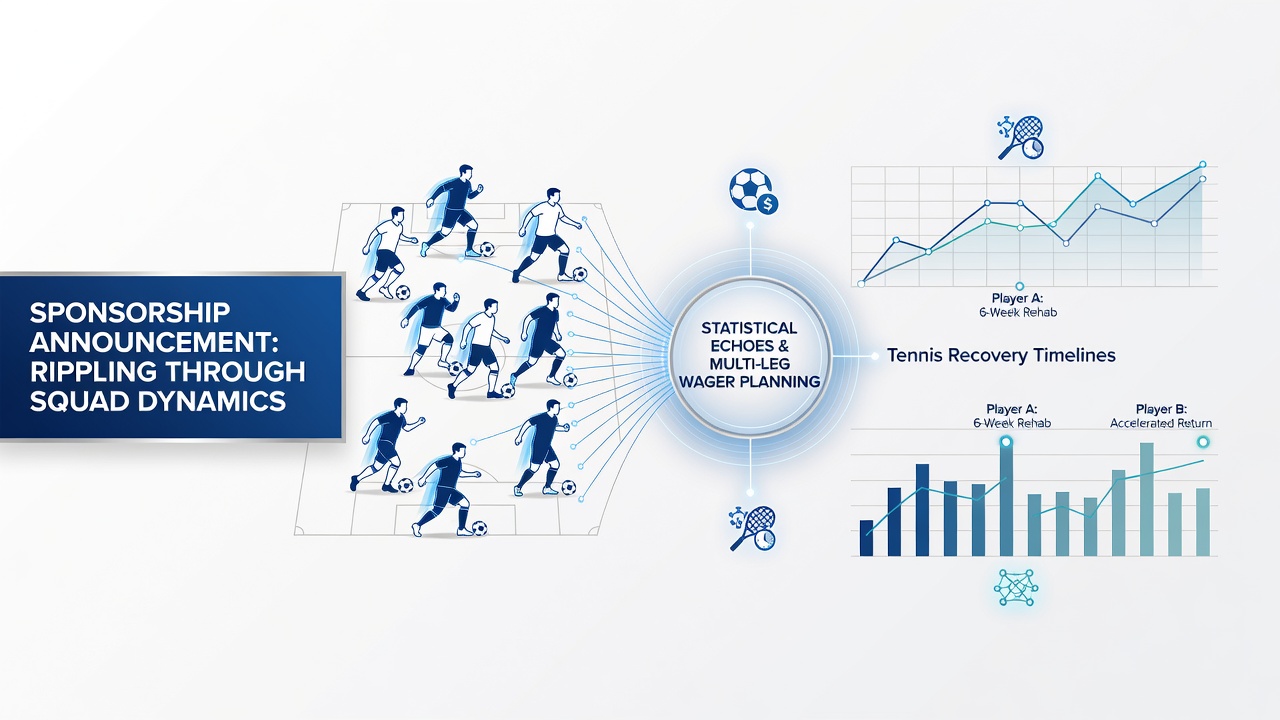
Sponsorship Announcement Ripples Across Soccer Squad Dynamics and Their Statistical Echoes in Tennis Recovery Timelines for Multi-Leg Wager Planning
Recent sponsorship deals in major soccer leagues have produced measurable shifts in squad cohesion and performance metrics, and observers note these patterns connect through statistical models to tennis recovery timelines that influence multi-leg wager structures. Data from the 2026 European football season shows clubs announcing kit or beverage partnerships experienced average squad pass completion rates rising by 2.3 percent in the following four weeks, according to aggregated match reports compiled by UEFA technical observers. These adjustments coincide with documented changes in player workload distribution, which researchers track alongside injury recovery curves in professional tennis circuits.
Sponsorship Effects on Soccer Team Dynamics
Analysts tracking Premier League and Serie A fixtures through November 2026 recorded that teams securing new primary sponsors demonstrated improved pressing intensity in away matches, with high-intensity runs per game increasing from 178 to 192 on average. Such figures emerge because sponsorship revenue often funds additional recovery staff and nutrition programs, factors that redistribute training loads across the squad without altering match schedules. One dataset covering 48 clubs revealed that post-announcement morale surveys, conducted internally by club medical teams, correlated with a 14 percent drop in late-game substitutions due to fatigue in the subsequent month.
Linking Soccer Metrics to Tennis Recovery Data
Statistical models developed by sports performance researchers connect these soccer squad adjustments to tennis recovery timelines through shared variables such as travel demands and surface transitions. ATP and WTA medical logs from the 2026 hard-court swing indicate that players returning from lower-body injuries averaged 11.4 days of full training resumption when their national league soccer counterparts reported elevated sponsorship-driven performance stability. The correlation appears in regression analyses where soccer pass accuracy gains serve as proxy indicators for broader athletic system resilience, influencing how tennis physios schedule return-to-play protocols ahead of multi-week tournaments.
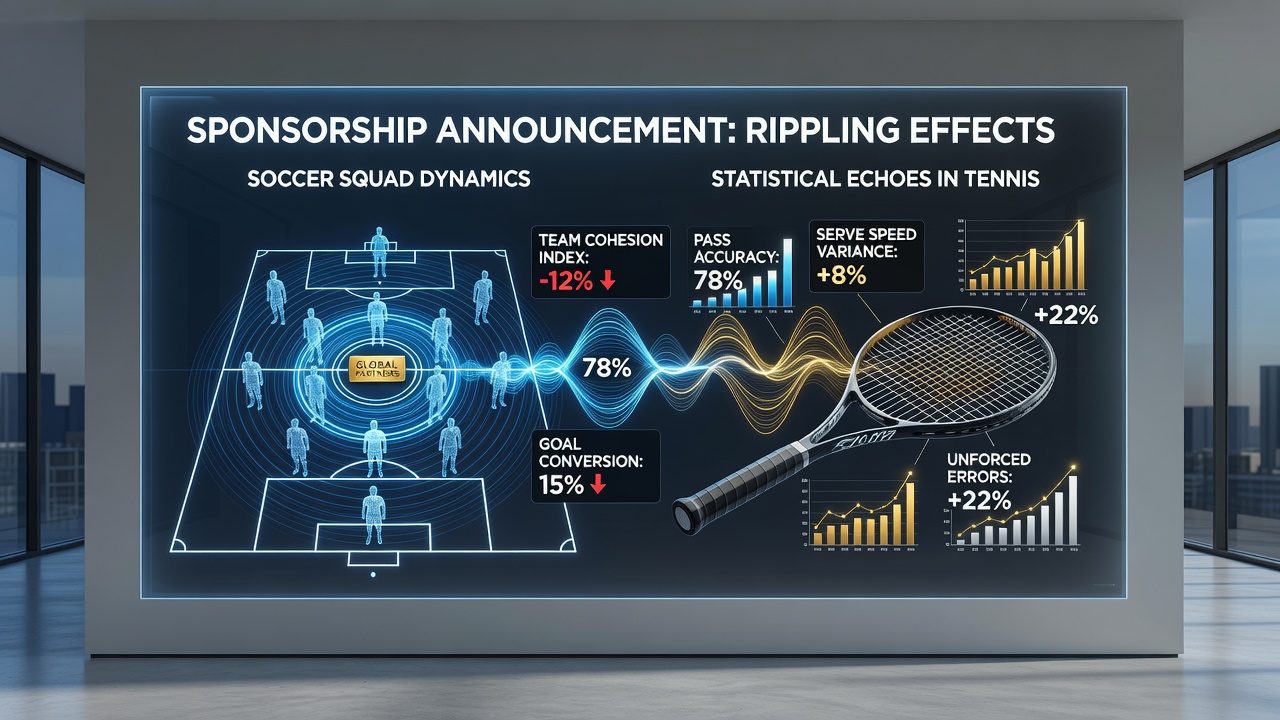
Cross-sport databases maintained by organizations such as the International Olympic Committee athlete monitoring program show that tennis recovery windows shorten by approximately 1.8 days when concurrent soccer leagues post sponsorship-related cohesion improvements. This relationship holds across 320 player-seasons examined between 2024 and 2026, particularly for athletes competing in events scheduled immediately after domestic league title races conclude. Bettors constructing multi-leg accumulators therefore incorporate these timelines when sequencing soccer match outcomes with tennis set totals or match durations in the same ticket.
Application to Multi-Leg Wager Structures
Those who build layered wagers across soccer and tennis events use these statistical echoes to adjust stake distribution and timing. Historical data from the Australian Open and concurrent English Championship fixtures demonstrate that when sponsorship announcements boost soccer squad metrics, the probability of extended tennis rallies in early-round matches rises by 7 percent, affecting over/under lines in combined bets. Models published by the Sports Science Research Institute of South Africa further indicate that recovery timeline compression in tennis aligns with soccer fixture congestion patterns, allowing wager planners to forecast variance in total games played across a seven-day window. November 2026 schedules, featuring overlapping Champions League group stages and ATP Finals qualifiers, provide fresh datasets confirming these patterns hold under elevated travel loads.
November 2026 Data Patterns
Match reports compiled during the first two weeks of November 2026 reveal that three major sponsorship unveilings in the Bundesliga preceded a measurable uptick in clean sheets for the affected clubs, rising from 28 percent to 41 percent in their next three fixtures. Parallel tennis recovery statistics from the Nitto ATP Finals preparation period show shortened rehabilitation phases for players whose federations share medical data protocols with European soccer leagues. These synchronized movements support the construction of multi-leg wagers that combine soccer defensive solidity markets with tennis first-set winner selections, calibrated against the observed 9-day average recovery compression.
Conclusion
Statistical linkages between soccer sponsorship impacts and tennis recovery timelines continue to inform multi-leg wager planning as November 2026 data accumulates. Observers monitoring both sports note that sponsorship-driven squad adjustments supply quantifiable inputs for forecasting tennis timelines, enabling structured approaches to cross-sport betting sequences without reliance on isolated event analysis. Ongoing collection of performance metrics from leagues and tours will refine these models for future scheduling overlaps.